Whitebark pine in the United States projected to experience an 80% reduction in climatically suitable area by the mid-21st century
9/20/26
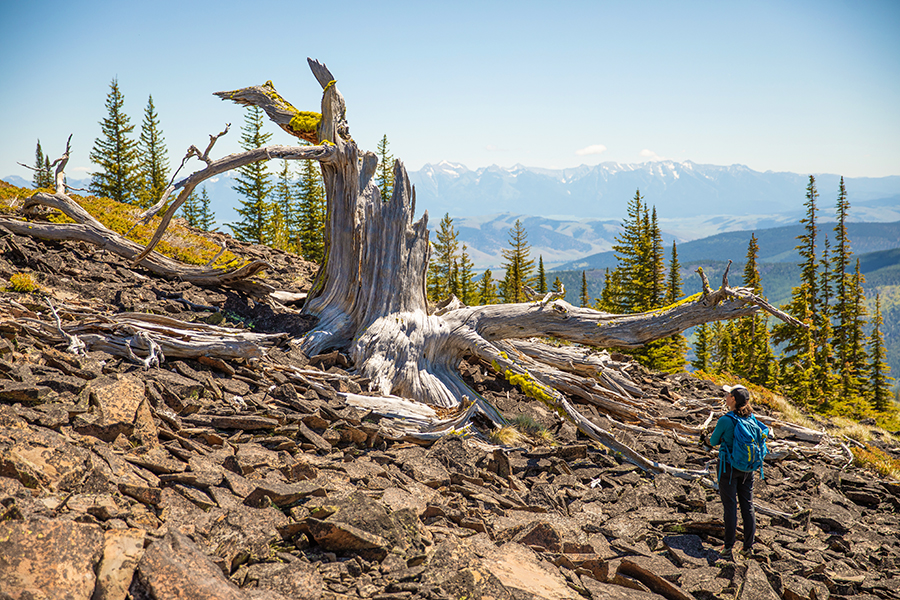
The iconic Whitebark pine (WBP; Pinus albicaulis) is a five-needle conifer tree species native to the western United States (US) and southwestern Canada, listed listed as ‘threatened’ under the US Endangered Species Act because of population declines from compound stressors, including climate change, introduced white pine blister rust (WPBR), widespread outbreaks of mountain pine beetle, and altered fire regimes.
Species recovery depends primarily on planting WBP seedlings that are resistant to WPBR, but suitable planting locations are likely to shift under climate warming. ALWRI Research Ecologist Sean Parks and his colleagues modeled and mapped WBP climatic suitability in the US using forest inventory data and fine-scale ( 220 m) climate datasets under reference period (1961–1990) and mid-21st century climatic conditions. The team projected an 80% reduction in the area climatically suitable for WBP by the mid-21st century. Moreover, they estimated that 75% of the climatically suitable area for WBP under mid-21st century climate is located in designated wilderness areas and national parks, which could challenge WBP recovery efforts, as these protected areas strive to reduce human manipulation of ecological systems.
WBP climate suitability maps resulting from the research team's models can be used to identify priority or ‘target areas’ where planting will have the highest likelihood of success and to identify areas within the WPB’s current range that are most vulnerable to rapid change should high-severity wildfires or mountain pine beetle outbreaks occur. Mapping WBP reference period and mid-21st century climate suitability is a fundamental step to efficiently prioritize restoration areas and develop a successful recovery program.